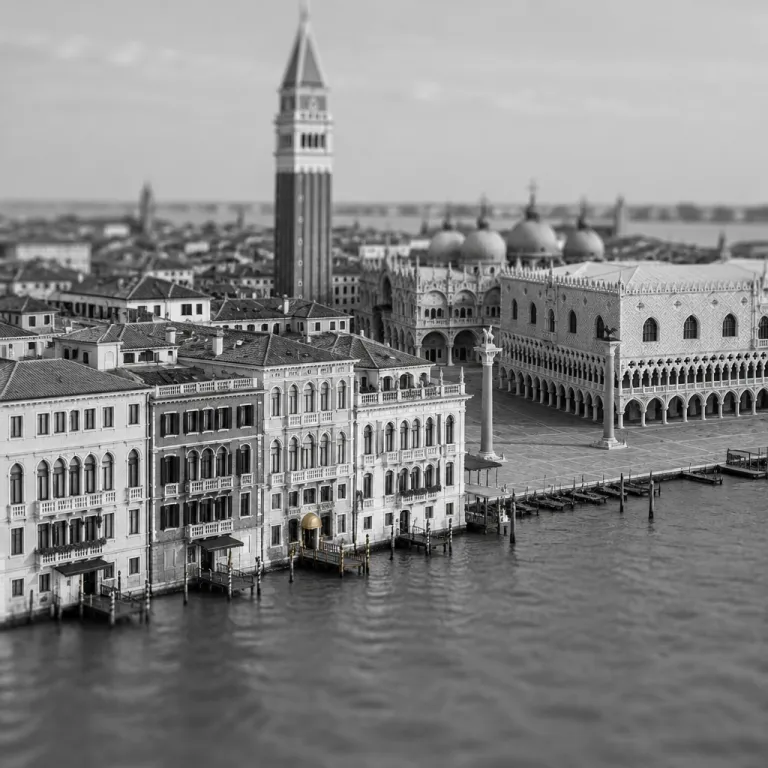
Why the Piazzetta di San Marco area shapes your entire Venice stay
The Piazzetta di San Marco is the small ceremonial space that links the open water of the Bacino di San Marco with the wider Piazza San Marco. This intimate urban space, framed by the Doge’s Palace on one side and the Biblioteca Marciana on the other, has long been called the “drawing room” of the city because it concentrates so much power and beauty in one square in Venice. When you book a hotel near this piazzetta, you place yourself at the historic centre of Venice while keeping the lagoon and its breezes just a few steps away.
Architecturally, this ensemble is one of the most refined in central Venice, and it rewards guests who like to walk slowly and look closely. The granite columns at the water’s edge, crowned by the Winged Lion of Saint Mark and the statue of the patron saint San Teodoro, mark the formal entrance to the city from the sea and still guide visitors arriving by boat. Between these columns and the campanile of Saint Mark, the space opens like a stage, with the Gothic tracery of the Doge’s Palace to the left and the classical façade of the library opposite, creating a square that feels both intimate and monumental.
For hotel guests, staying near this San Marco ensemble means that Saint Mark’s Basilica, the Doge’s Palace and the campanile are all within a two or three minute walk. You can step out into Piazza San Marco at dawn, when the light softens the palace stone and the square is almost empty, then retreat easily to your room before the day’s crowds arrive. In the evening, the same square in Venice becomes a quieter, more theatrical setting again, and the short stroll back to your hotel through the Piazzetta di San Marco feels like crossing a private drawing room.
Choosing the right hotel around the Piazzetta and Piazza San Marco
When you compare hotels around the Piazzetta di San Marco, think in terms of micro locations within the larger Piazza San Marco area. Properties directly on the main square or facing the piazzetta offer unmatched views of Saint Mark’s Basilica, the campanile and the Doge’s Palace, but they also sit at the busiest point in the centre of Venice. A hotel one or two narrow streets back from the main piazza can give you quieter nights, slightly better value and a more Venetian residential feel while keeping the Piazzetta di San Marco only a short walk away.
To understand how each palace or converted residence relates to the urban fabric, study a detailed map before booking and note the distance to the lagoon edge and the main vaporetto stops such as San Zaccaria (Danieli) and Vallaresso (San Marco). A hotel on the left when you face the water, closer to the Riva degli Schiavoni, will give faster access to boats for the islands, while one tucked behind the basilica or near the Mercerie will connect you more quickly to Rialto and the shopping streets. For a structured overview of each sestiere and how the San Marco district compares with quieter neighbourhoods, consult a specialist guide to the best areas to stay in Venice for tourists before you commit.
Room categories also matter more here than in many other parts of the city, because a modest room with a partial view of the campanile or the lagoon can feel very different from an interior room facing a narrow alley. Ask clearly whether your room overlooks Piazza San Marco, the basilica, a side canal or an internal courtyard, and request exact measurements in square metres to compare space fairly. In historic Venetian buildings around the piazzetta, lifts can be small and layouts irregular, so clarify access if you have mobility needs and confirm whether your floor is reached by stairs from the main landing.
Living with history: Doge’s Palace, Saint Mark’s Basilica and the lagoon at your doorstep
Staying beside the Piazzetta di San Marco means that the Doge’s Palace and Saint Mark’s Basilica are not just daytime attractions but part of your everyday surroundings. The Doge’s Palace, once the political heart of the Venetian Republic, rises directly from the piazzetta with its lace-like stonework and arcades, and its proximity shapes the rhythm of the area from early morning until late evening. Saint Mark’s Basilica, with its domes and mosaics, closes the vista of the square and reflects the changing light in a way that guests can appreciate differently at dawn, midday and night.
From many hotel windows around this San Marco complex, you can see the campanile of Saint Mark, the basilica domes or the lagoon beyond the columns that guard the water entrance. The two granite columns, called the Columns of Saint Theodore and of the Winged Lion of Saint Mark, stand where the city once received ambassadors and merchants arriving by sea, and they still frame the view for travellers stepping off modern boats. When you cross this space between palace and library several times a day, you begin to feel how the urban design was meant to impress visitors and to connect religious, political and maritime power in a single ceremonial square in Venice.
To make the most of this setting, plan your visits to the Doge’s Palace and Saint Mark’s Basilica for early morning or late afternoon, when queues are shorter and the basilica interior feels calmer. A hotel close to the piazzetta allows you to return briefly to your room between visits, avoiding the midday crush in the San Marco area and keeping your energy for quieter explorations. For practical strategies on timing, ticketing and moving efficiently between the Piazzetta di San Marco, Rialto and the wider city, use a detailed guide on how to visit Venice like a hotel-savvy traveller and adapt its advice to your own pace.
The Piazzetta as Venice’s “drawing room” and Canaletto’s open air theatre
Art historians often describe the combined space of the Piazzetta di San Marco and the main piazza as the drawing room of Venice, and staying nearby lets you experience that metaphor hour by hour. Painters such as Canaletto repeatedly returned to this square in Venice, capturing the Doge’s Palace, the campanile and the crowds in Piazza San Marco from slightly different angles to show how light and ceremony animated the scene. When you walk across the piazzetta early in the morning, with only a few locals and delivery boats in view, you can almost step into one of those Canaletto canvases.
The urban choreography here is deliberate, from the way the palace arcades lead your eye towards the lagoon to how the columns frame the open water and the islands beyond. On your left as you face the water stands the Doge’s Palace, with its Gothic tracery and pink stone, while to the right the Biblioteca Marciana presents a classical façade that balances the composition and anchors the San Marco ensemble. This careful balance between palace, basilica, campanile and library is what makes Piazza San Marco and the adjoining piazzetta feel like a single, coherent stage set rather than two unrelated spaces.
For hotel guests, this means that even a short walk from your lobby to a café table in the San Marco square becomes a small performance, with gondoliers, orchestras and passing visitors as your cast. If you value quiet, choose a property slightly removed from the immediate drawing room of the city, perhaps behind the basilica or towards the Accademia side, and then dip into the piazzetta when you want that theatrical energy. A thoughtful balance between immersion in Saint Mark’s Square life and retreat to a calmer Venetian side street will make your stay both memorable and restful.
Practicalities: tides, timing and moving around from the Piazzetta
The Piazzetta di San Marco is a low-lying space, and its proximity to the lagoon means that acqua alta, or high tide flooding, can affect this part of the square in Venice more quickly than higher parts of the city. When you choose a hotel near the piazzetta, ask about their arrangements during high water, including raised walkways, alternative entrances and whether ground floor facilities remain usable. Properties slightly back from the lagoon edge or a few steps higher than the main square may experience fewer disruptions while still keeping the Doge’s Palace and basilica within easy reach.
Timing your day around the rhythms of the Piazza San Marco and San Marco districts will also shape your experience. Early morning offers the best light on the palace façades and the columns, with the campanile casting long shadows across the urban space, while late evening brings softer crowds and a more intimate atmosphere in the square. Midday is when Piazza San Marco and the adjoining piazzetta are busiest, so many seasoned travellers use those hours to explore quieter sestieri, returning to the centre of Venice only when the day trippers have thinned.
Transport connections from the Piazzetta di San Marco area are excellent, with vaporetto stops at San Zaccaria and Vallaresso providing links along the Grand Canal and out to the islands. From a hotel near the piazzetta, you can reach the railway station in about thirty minutes by boat, yet still feel anchored in the historic heart of the city each night. For ideas on combining a central base near Saint Mark’s Square with forays into less visited quarters, consult a specialist itinerary on how to stay in Venice off the beaten path, such as a guide to quieter neighbourhoods, islands and hotels, and adapt its suggestions to your own interests.
Reading the symbols: saints, columns and the layered identity of San Marco
One of the pleasures of staying near the Piazzetta di San Marco is learning to read the symbols that surround you each time you cross this ceremonial square in Venice. At the lagoon edge, the two granite columns rise from the piazzetta, one topped by the Winged Lion of Saint Mark and the other by the statue of the patron saint San Teodoro, and together they announce the dual religious and civic identity of the city. Behind them, the façade of Saint Mark’s Basilica and the Doge’s Palace reinforce this message, with the basilica representing spiritual authority and the palace representing the power of the Venetian Republic.
The Biblioteca Marciana, facing the palace across the piazzetta, adds a third layer by embodying humanist learning and the role of books in the life of San Marco. Designed by Jacopo Sansovino and later extended by Vincenzo Scamozzi, it shows how the city invested in knowledge as well as ceremony, and its presence turns the Piazza San Marco and Piazzetta di San Marco ensemble into a kind of open air library. When you stay nearby, you can appreciate how this urban space was carefully composed to align with the approach from the sea and to present Venice as a place where saint, state and scholarship met in a single square.
Visitor management today continues this tradition of careful planning, with measures such as “Visitor flow management via totems in Piazzetta area”, “Preservation of pavement and façades” and “Regulation of ships docking on Molo” helping to protect the San Marco environment for future guests. Choosing a hotel that supports these efforts, for example by encouraging off-peak visits to the Doge’s Palace or by providing information on respectful behaviour in the basilica, allows you to participate in the ongoing care of this unique urban space. Over several days, the repeated walk between your hotel and the piazzetta will make these layers of meaning feel less like abstract history and more like part of your own experience of Venice.
Key figures and practical statistics for staying near the Piazzetta di San Marco
- The granite columns at the lagoon edge of the Piazzetta di San Marco were erected around 1268, according to scholarly consensus from Venetian archival studies, which means hotel guests today are still entering the city through a ceremonial gateway defined more than seven centuries ago.
- The construction of the Biblioteca Marciana, which frames one side of the piazzetta, began in 1537 based on building records held in the city archives, so the library has been shaping the visual identity of the San Marco area for almost five centuries.
- The Zecca, or former mint building near the piazzetta, was completed in 1547 according to architectural history sources, reinforcing the role of the San Marco district as both a political and financial centre of Venice for the maritime republic.
- Because the Piazzetta di San Marco sits at the edge of the lagoon, local authorities note that it is among the first parts of the square in Venice to experience acqua alta, so hotels within a radius of about 200 to 300 metres often prepare raised walkways during peak tide seasons.
- Visitor flow management systems, including digital totems and marked routes, have been introduced in the Piazza San Marco and piazzetta areas to reduce congestion, which helps hotel guests move more smoothly between the Doge’s Palace, Saint Mark’s Basilica and nearby transport stops.
FAQ about staying near the Piazzetta di San Marco
Is the Piazzetta di San Marco part of Piazza San Marco ?
No, the Piazzetta di San Marco is a separate but adjoining open space that connects the main Piazza San Marco to the lagoon, and it sits between the Doge’s Palace and the Biblioteca Marciana. For hotel guests, this means that a room advertised as being on the piazzetta may face the water entrance rather than the central square. Both spaces function together as the ceremonial heart of Venice, but they have slightly different atmospheres and exposure to crowds.
What are the two columns in the Piazzetta di San Marco called ?
The two granite columns at the lagoon edge of the Piazzetta di San Marco are called the Columns of Saint Theodore and of the Winged Lion of Saint Mark. They symbolise the city’s patron saints and frame the historic water entrance to the San Marco district, making them a key reference point when you orient yourself between your hotel and the waterfront. Many travellers use these columns as a meeting place because they stand clearly between the Doge’s Palace and the open water.
Is it better to stay directly on the square or a few streets away ?
Staying directly on Piazza San Marco or facing the piazzetta gives you unmatched views of Saint Mark’s Basilica, the campanile and the Doge’s Palace, but it also means more noise and foot traffic beneath your windows. A hotel a few streets behind the basilica or towards the Accademia side usually offers quieter nights while keeping the main square and piazzetta within a three to five minute walk. Your choice depends on whether you prioritise immediate access to the square in Venice or a calmer Venetian atmosphere.
How does acqua alta affect hotels near the Piazzetta di San Marco ?
During periods of acqua alta, the low-lying piazzetta and parts of Piazza San Marco can flood first, so hotels at lagoon level may need to use raised walkways and temporary barriers. Many properties in the San Marco area have adapted over time, keeping essential services on higher floors and informing guests about safe routes through the square. When booking, ask how often the hotel is affected, what measures they take and whether access to the palace, basilica and vaporetto stops remains practical.
Are there quieter times to enjoy the Piazzetta di San Marco while staying nearby ?
Yes, early morning and late evening are the most peaceful times to experience the Piazzetta di San Marco and the adjoining Piazza San Marco, especially outside peak holiday periods. At these hours, the square in Venice feels closer to the Canaletto paintings, with softer light on the palace façades and fewer tour groups around the columns and campanile. Choosing a hotel within a short walk of the piazzetta allows you to enjoy these quieter windows every day without long transfers.